Japan
Things to do in Kyoto
46 places22 stories3 routes
Sightlore has 46 places to explore in Kyoto, and 22 of them come with a 60-second story in 5 languages. Point your camera at a landmark to learn its name and story, and earn points and badges at the places you actually visit.
Kyoto's must-sees
The city's most important places. In the app you see how many you've visited and earn a badge when you've seen them all.
- 1

Kyoto Municipal Museum of Art
The Kyoto City Kyocera Museum of Art is located in Okazaki Park in Sakyō-ku Kyoto.
- 2

Nijō Castle
Nijō Castle is a flatland castle in Kyoto, Japan. The castle consists of two concentric rings (Kuruwa) of fortifications, the Ninomaru Palace, the ruins of the Honmaru Palace, various support buildings and several gardens.
- 3

Tō-ji Temple
Tō-ji Temple, a.k.a. the Kyō-ō-gokoku-ji is a Shingon Buddhist temple in the Minami-ku ward of Kyoto, Japan.
- 4

Kinkaku-ji Temple
Kinkaku-ji, officially named Rokuon-ji, is a Zen Buddhist temple in Kyoto, Japan and a tourist attraction.
- 5

Kyoto National Museum
The Kyoto National Museum is one of the major art museums in Japan. Located in Kyoto's Higashiyama ward, the museum focuses on pre-modern Japanese and Asian art.
- 6

Chion-in Temple
Chion-in in Higashiyama-ku, Kyoto, Japan is the headquarters of the Jōdo-shū (Pure Land Sect) founded by Hōnen, who proclaimed that sentient beings are reborn in Amida Buddha's Western Paradise (Pure Land) by reciting the nembutsu, Amida Buddha's name.
- 7

Kōdai-ji Temple
Kōdai-ji is a Buddhist temple located in the Shimogawara neighborhood of Higashiyama-ku, Kyoto, Japan. It belongs to the Kenninji branch of the Rinzai school of Japanese Zen.
- 8

Ginkaku-ji Temple
Ginkaku-ji, officially named Jishō-ji, is a Zen temple in the Sakyo ward of Kyoto, Japan. It is one of the constructions that represent the Higashiyama Culture of the Muromachi period.
- 9

Fushimi Inari-taisha
Fushimi Inari-taisha is the head shrine of the kami Inari, located in Fushimi-ku, Kyoto, Japan.
- 10

Bamboo Forest
The Bamboo Forest, Arashiyama Bamboo Grove, or Sagano Bamboo Forest is a natural bamboo forest in Arashiyama, Kyoto, Japan. It is known for its mōsō bamboo (Phyllostachys edulis) and has several pathways for tourists and visitors.
Discovery routes in Kyoto
Visit the stops in any order and tap "Check in" at each one; finish the route to earn points and its own badge.
Kyoto: Sanjūsangen-dō, Kiyomizu-dera and Gion
From Sanjūsangen-dō to the Kyoto National Museum and Kiyomizu-dera; then Kōdai-ji, Maruyama Park, Chion-in, Yasaka Shrine, the Gion district and the Minami-za theatre.
Kyoto: Heian Jingū, Nanzen-ji and the Philosopher's Walk
From the Kyoto City Museum of Art to Heian Jingū and Nanzen-ji; then along the Philosopher's Walk to Ginkaku-ji.
Kyoto: Fushimi Inari, Kinkaku-ji and Arashiyama
From Fushimi Inari-taisha to Tō-ji and Nijō Castle; then Kinkaku-ji, Ryōan-ji and, in Arashiyama, Tenryū-ji, the Bamboo Forest and Togetsukyō Bridge.
Places to visit
Historic sites

Gion
Gion is a district of Higashiyama-ku, Kyoto, Japan, originating as an entertainment district in the Sengoku period, in front of Yasaka Shrine (Gion Shrine).

Minami-za
Minami-za is the primary kabuki theatre in Kyoto, Japan. It was founded in 1610 as Shijō Minami-za.
Nijō Castle
Nijō Castle is a flatland castle in Kyoto, Japan. The castle consists of two concentric rings (Kuruwa) of fortifications, the Ninomaru Palace, the ruins of the Honmaru Palace, various support buildings and several gardens.

Togetsu-kyō
Arashiyama is a district on the western outskirts of Kyoto, Japan. It also refers to the mountain across the Ōi River, which forms a backdrop to the district. Arashiyama is a nationally designated historic site and place of scenic beauty.

Fushimi Castle
Fushimi Castle, also known as Momoyama Castle or Fushimi-Momoyama Castle, is a Japanese castle located in Fushimi Ward, Kyoto.

Kyoto Imperial Palace
The Kyōto Imperial Palace, also known as Dairi or Kinri, is the former palace of the Emperor of Japan from 1331 to 1869 located in Kamigyō-ku, Kyoto, Japan.

Sanjō Ōhashi Bridge
Sanjō Ōhashi is a bridge in Kyoto, Kyoto Prefecture, Japan. It spans the Kamo River as part of Sanjō-dōri.
Museums
Kyoto National Museum
The Kyoto National Museum is one of the major art museums in Japan. Located in Kyoto's Higashiyama ward, the museum focuses on pre-modern Japanese and Asian art.
Kyoto Municipal Museum of Art
The Kyoto City Kyocera Museum of Art is located in Okazaki Park in Sakyō-ku Kyoto.

Kyoto City Archaeological Museum
The Kyoto City Archaeological Museum is located in Kyoto and showcases the city's archaeological findings.

Kyoto Railway Museum
The Kyoto Railway Museum (formerly the Umekoji Steam Locomotive Museum until 2016) is a railway museum in Shimogyō-ku, Kyoto, Japan.

Kyoto Museum for World Peace
The Kyoto Museum for World Peace is part of Ritsumeikan University in Kita-ku, Kyoto, Japan. The Museum is accessible to the public for a 200–400 Yen fee.

Museum of Kyoto
The Museum of Kyoto is a museum of the history and culture of Kyoto.

National Museum of Modern Art, Kyoto
The National Museum of Modern Art, Kyoto is an art museum in Kyoto, Japan. This Kyoto museum is also known by the English acronym MoMAK (Museum of Modern Art, Kyoto).

Kyoto International Manga Museum
The Kyoto International Manga Museum is located in Nakagyō-ku, Kyoto, Japan.

Nomura Art Museum
Nomura Art Museum opened near Nanzen-ji in Kyoto, Japan, in 1984. The sukiya-style building has two rooms for displaying exhibits and there is also a chashitsu.

Sen-oku Hakuko Kan
The Sen-Oku Hakukokan Museum is located in Kyoto, Japan and houses a large collection of Chinese bronze vessels, Chinese and Japanese mirrors, and a few Chinese bronze Buddhist figures.
Places of worship

Sanjūsangen-dō Temple
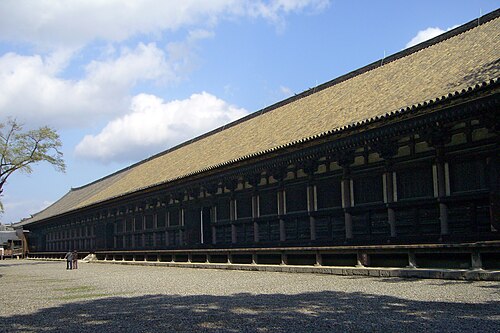
Sanjūsangen-dō is a Buddhist temple of the Tendai sect in the Higashiyama district of Kyoto, Japan. The temple was founded in 1164 by Taira no Kiyomori for the cloistered Emperor Go-Shirakawa.

Kiyomizu-dera
Kiyomizu-dera is a Buddhist temple located in eastern Kyoto, Japan. It belongs to the Kita-Hosso sect of Japanese Buddhism and its honzon is a hibutsu statue of Jūichimen Kannon. The temple's full name is Otowa-san Kiyomizu-dera.
Kōdai-ji Temple
Kōdai-ji is a Buddhist temple located in the Shimogawara neighborhood of Higashiyama-ku, Kyoto, Japan. It belongs to the Kenninji branch of the Rinzai school of Japanese Zen.
Chion-in Temple
Chion-in in Higashiyama-ku, Kyoto, Japan is the headquarters of the Jōdo-shū (Pure Land Sect) founded by Hōnen, who proclaimed that sentient beings are reborn in Amida Buddha's Western Paradise (Pure Land) by reciting the nembutsu, Amida Buddha's name.

Yasaka Shrine
Yasaka Shrine, once called Gion Shrine, is a Shinto shrine in the Gion District of Kyoto, Japan. Situated at the east end of Shijō-dōri (Fourth Avenue), the shrine includes several buildings, including gates, a main hall and a stage.

Heian Jingū
The Heian Shrine is a Shinto shrine located in Sakyō-ku, Kyoto, Japan. The Shrine is ranked as a Beppyō Jinja (the top rank for shrines) by the Association of Shinto Shrines. It is listed as an important cultural property of Japan.

Nanzen-ji Temple
Nanzen-ji, or Zuiryusan Nanzen-ji, formerly Zenrin-ji, is a Zen Buddhist temple in Kyoto, Japan. Emperor Kameyama established it in 1291 on the site of his previous detached palace.
Ginkaku-ji Temple
Ginkaku-ji, officially named Jishō-ji, is a Zen temple in the Sakyo ward of Kyoto, Japan. It is one of the constructions that represent the Higashiyama Culture of the Muromachi period.
Fushimi Inari-taisha
Fushimi Inari-taisha is the head shrine of the kami Inari, located in Fushimi-ku, Kyoto, Japan.
Tō-ji Temple
Tō-ji Temple, a.k.a. the Kyō-ō-gokoku-ji is a Shingon Buddhist temple in the Minami-ku ward of Kyoto, Japan.
Kinkaku-ji Temple
Kinkaku-ji, officially named Rokuon-ji, is a Zen Buddhist temple in Kyoto, Japan and a tourist attraction.

Ryōan-ji Temple
Ryōan-ji is a Zen temple located in northwest Kyoto, Japan. It belongs to the Myōshin-ji school of the Rinzai branch of Zen Buddhism.

Tenryū-ji Temple
Tenryū-ji, formally known as Tenryū Shiseizen-ji, is the head temple of the Tenryū-ji branch of the Rinzai sect of Zen Buddhism, located in Susukinobaba-chō, Ukyō Ward, Kyoto, Japan.

St. Agnes Cathedral
St. Agnes Cathedral is a Christian church located in Kyoto, Japan, and is the diocesan cathedral of the Diocese of Kyoto, which comprises all the Anglican-Episcopal churches and other facilities in Fukui, Ishikawa, Kyoto, Mie, Nara, Shiga, and Toyama, and Wakayama Prefectures.

Holy Annunciation Cathedral
Cathedral of the Japanese Orthodox Church in Nakagyō, Kyoto; the oldest surviving Orthodox church built to Russian designs in Japan, listed as an Important Cultural Property.

Saihō-ji Temple
Saihō-ji is a Buddhist temple located in Matsuo, Nishikyō-ku, Kyoto, Japan. It belongs to the Rinzai school of Japanese Zen, and honzon is a statue of Amida Nyorai.

Sennyū-ji Temple
Sennyū-ji, formerly written as Sen-yū-ji, is a Shingon Buddhist temple and head of the Sennyū-ji sect in Higashiyama-ku in Kyoto, Japan.
Monuments

Mimizuka
The Mimizuka, which was renamed from Hanazuka, is a monument in Kyoto, Japan. It is dedicated to the sliced noses of killed Korean soldiers and civilians, as well as those of Ming Chinese troops, taken as war trophies during the Imjin War.
Nature

Maruyama Park
Maruyama Park is a park in Kyoto, Japan. It is noted as the main center for cherry blossom viewing in Kyoto, and can get extremely crowded at that time of year (April).

Philosopher's Walk
The Philosopher's Walk is a pedestrian path that follows a cherry-tree-lined canal in Kyoto, Japan between Ginkaku-ji and Nanzen-ji.
Bamboo Forest
The Bamboo Forest, Arashiyama Bamboo Grove, or Sagano Bamboo Forest is a natural bamboo forest in Arashiyama, Kyoto, Japan. It is known for its mōsō bamboo (Phyllostachys edulis) and has several pathways for tourists and visitors.

Iwatayama Monkey Park
Iwatayama Monkey Park is a commercial park located in Arashiyama in Kyoto, Japan. The park is located atop Mount Arashiyama, on the opposite side of the Ōi River of the train station.

Kyoto Botanical Garden
The Kyoto Botanical Garden, also known as the Kyoto Prefectural Botanical Garden, is a major botanical garden with conservatory located next to the Kamo River, Hangi-cho Simogamo, Sakyō-ku, Kyoto, Japan.

Kyoto Gyoen National Garden
Kyoto Gyoen National Garden is a 65-hectare national garden of Japan that was established after the Japanese capital was transferred from Kyoto to Tokyo. It is situated around the Kyoto Imperial Palace.

Kyoto City Zoo
Kyoto City Zoo is a zoo located in Sakyō ward, Kyoto and was established in 1903, making it the second oldest zoo in the country after Ueno Zoo in Tokyo. The Kyoto City Zoo is a member of the world Association of Zoos and Aquariums.
Other

Kyoto Aquarium
Kyoto Aquarium is an aquarium located in Umekoji Park in Kyoto City, Kyoto Prefecture's Shimogyo Ward, Japan.

Kyoto Tower
Kyoto Tower, now officially renamed Nidec Kyoto Tower, is an observation tower located in Kyoto, Japan. The steel tower is the tallest structure in Kyoto with its observation deck at 100 metres (328 ft) and its spire at 131 metres (430 ft).

Nishiki Market
Nishiki Market is a marketplace in downtown Kyoto, located on the east end of Nishikikōji Street, one block north and parallel to Shijō Street and west of Teramachi Street.

Toei Kyoto Studio Park
Toei Kyoto Studio Park, also known as Usumaza Kyoto Village, is a film set and theme park in Kyoto, Japan. It opened in 1975. It is situated in Toei Company's Kyoto Studio where numerous period dramas have been filmed.
Explore Kyoto with your camera
Hear the stories on the spot, complete routes, collect badges. Sightlore is coming soon to the App Store.